
Think your website’s working hard for your business? Maybe. Maybe not. In Part 1, we broke down why your site can’t just look pretty—it needs to perform. Now in Part 2, we’re doubling down with real examples of business and e-commerce websites that are doing just that. From attracting top talent to ringing up online sales while you sleep, these sites are built to move the needle. We’ll also unpack some key stats and strategies that could mean the difference between “meh” and massive ROI. Let’s get into it.
Real-World Examples of Effective Business Websites
James: All right. Let’s look at some examples here. The two main categories of websites I want to build—or explain—are business websites and e-commerce websites. There are infinite varieties of those, but they all fall under those two topics. The first one is Northern Escape Heli-skiing. This is all about creating a wow experience. Obviously, people are looking for the ultimate vacation. They just want to be going, “Wow, look at this. This is so beautiful. I want to be here.”
Dennis: It’s beautiful.
James: There’s a lot of photography, a lot of videos. It’s very brochure-like in that sense. But because we’re using this as a business tool, we have this cool little skier that follows you down and teaches you about the seasons, the packages, where you’re going to stay, and things like that. It’s really doing a lot of work—making you go, “Wow, this is a really nice place. I want to go here and ski with these guys.”
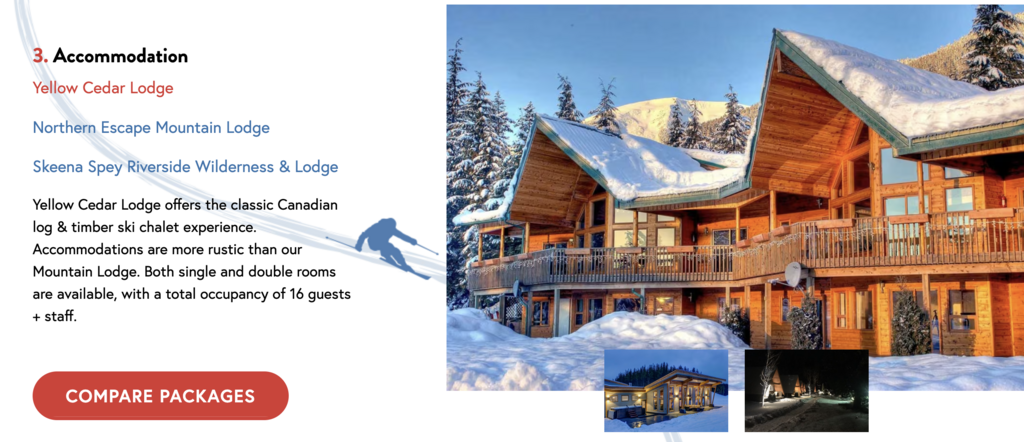
Ultimately, this site is all about creating bookings—clicking “Book Now,” designing your experience. Calls to action. “Hey, I want to book a package.” This site is responsible for being a travel agent, effectively.
Another cool site is Kimco. Kimco is an HVAC company. The neat thing about Kimco is that they have different locations. If you click on “Contact,” their old site didn’t give a good indication of where they actually operated. People thought they were only in Kelowna. But they also have Penticton, the Kootenays.
So, service regions were very important. Also, a big part of the site was recruiting, attracting more people who want to work for them. Their careers page was, again, nonexistent.
When we built the site, there was a big focus on growing the team through our recruitment support services. We wanted to show how cool a place it is to work. That was a really big point. You can see they have four job postings right now, and they’re getting a lot more inquiries than they used to.
James: Another site here—Pool Patrol. These guys sell automatic covers for swimming pools. One of the big things about Pool Patrol’s website was demonstrating the product. It was really important for the site to start informing and educating.
Instead of having a basic website that didn’t really show how good this stuff is or prove they were leaders in their industry, we needed to elevate that. Otherwise, you’re left scratching your head a little bit.
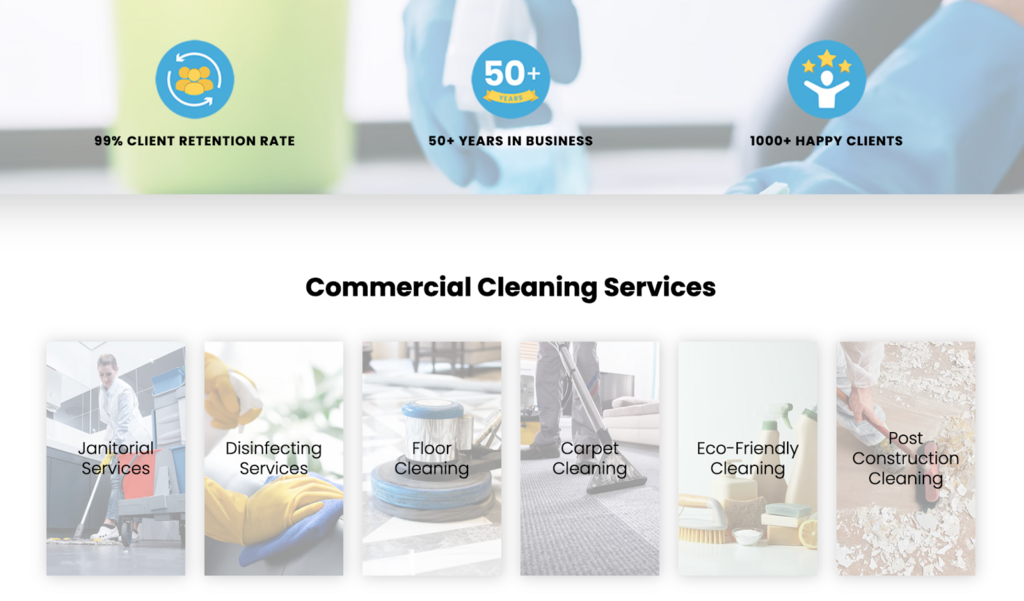
You couldn’t see all the different photos, installations, or hear from happy customers. That sort of thing is actually very similar to this janitorial website company. This is a commercial cleaning business in Ontario.
The big thing here was really just getting leads—making the phone ring, getting quote requests. But we also had to show that this company is one of the leaders in the Toronto area and the GTA. They can handle all these different types of buildings, projects, and jobs. They have a lot of people who would refer and recommend them. So this was a big sales tool for Jani King of Southern Ontario.
Another completely different industry would be high-tech and digital. Very complicated industries here—very high-ticket clients. In this case, a client value could be in the hundreds of thousands, if not more.
So we have a very complicated situation to explain, and the website’s job is to simplify what was formerly very hard to understand, at least at first glance. Helping someone get their head wrapped around what these guys do and whether they can help.
Industrial automation, plant telematics, and case studies. You said before, Dennis, how important case studies are when you’re trying to sell something.
Dennis: Yes.
James: This is really important for these guys.
Bringing it back locally, we have one called FH&P Lawyers. The big thing about this particular website was showing the community-driven aspect of this law firm.
A law firm is like another service company that’s based in your locale. They have a very tight geography. When they’re a local service provider, they don’t really care about ranking in another part of the country. But they really want to stand out in their own backyard.
Dennis: And that’s because you have competition.
James: They do—lots of competition. So showing the community aspect was a really big job that this website had.
Dennis: And it kind of differentiates them in the marketplace.
James: It does. And it represents their brand. Their brand is really important. They even have a whole section dedicated to knowledge—podcasts, community news, and more. They have their own podcast show and a lot of neat things going on with this law firm.
E-Commerce Websites: Turning Browsers into Buyers
James: Moving into the e-commerce side of things, this is where a website is like all the ones we previously discussed, but with the added job of selling.
Sites like Fresh Air have a catalog built in. So if you’re shopping for a snowboard, you see the options: “Sweet, I like the look of that one. That’s really cool.” You click into it, see the cost, availability, and product information. You can sign up for their newsletter when it pops up.
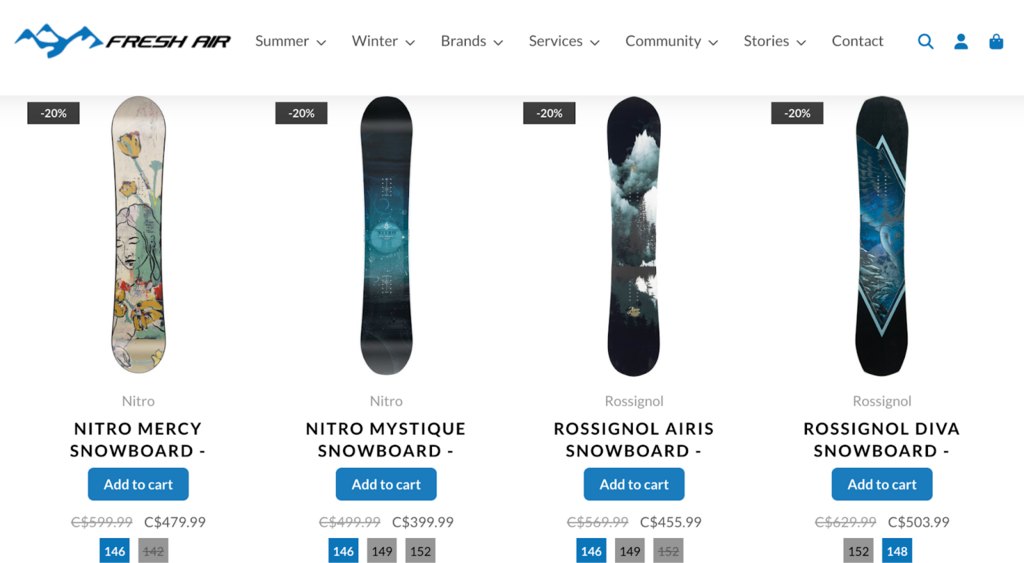
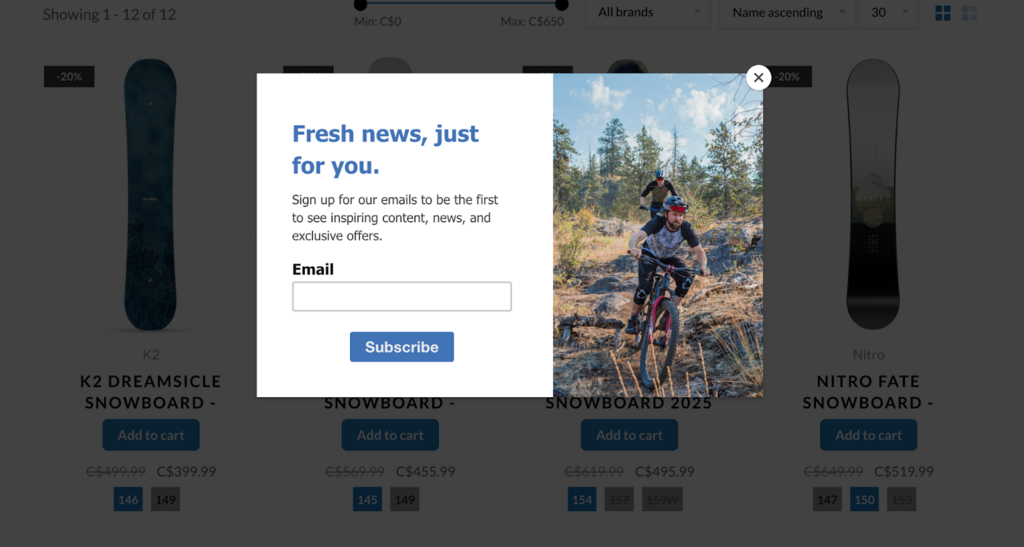
They have many aspects of informational and business sites, but they have an additional job—to literally take people’s money.
Dennis: Yeah. You’re not sending somebody to a salesperson in this case. They’re actually looking to spend money on this website and purchase their product.
James: That’s right. You want to get out of their way. They want to buy something. Your website’s job is to help them buy.
Dennis: And that purchase could take place at 10 o’clock at night or 5 in the morning.
James: Exactly. Have you ever heard that saying, “No one wants to be sold, but everyone wants to buy”?
Dennis: Yeah!
James: That’s a great way to phrase an e-commerce website. You want it to be almost like a recreational activity. People love the site, the experience. They love the photos, the cool customer reviews. They see the pictures, they watch some videos, and they’re just pumped about it.
Dennis: Yeah. It gives them an idea of what purchasing this product could make them feel like.
James: And then they buy. They get free shipping. Maybe a discount for signing up on the newsletter or placing their first order. You’re helping them buy something they already want—and because the experience is so good, they come back again. Maybe they even tell someone else, and now you’ve got more sales.
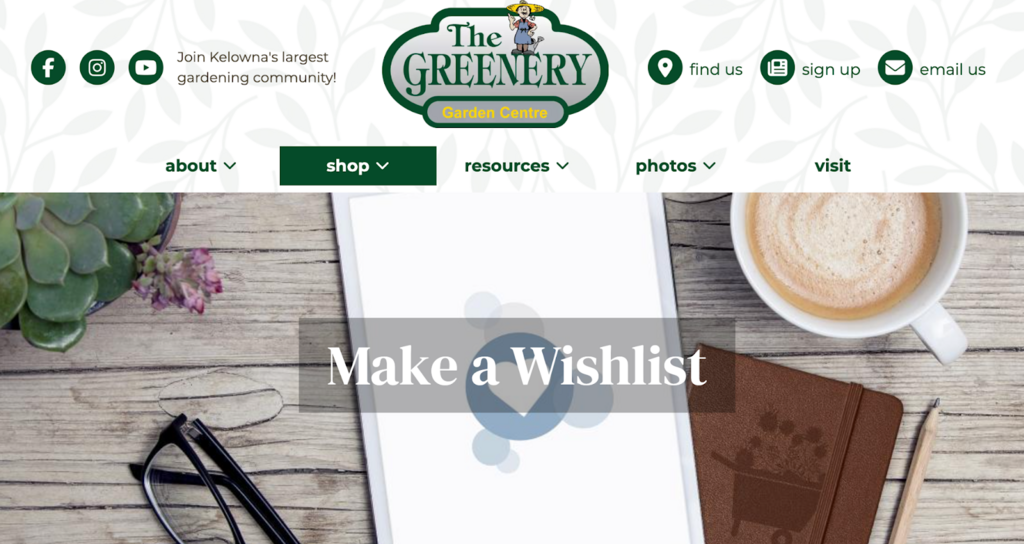
Another example is a garden center. Both Fresh Air and The Greenery, which I’m showing on screen, are brick-and-mortar stores. They have physical locations, but they also have e-commerce. So it’s a hybrid. They have salespeople and customer service if you visit them, but you can also buy things online directly.
Dennis: I’m sure many customers shop the site and then go into the store to make their purchase.
James: That’s actually a really good point. People do research online. They like what they see, and then they go in person to buy.
The Greenery actually has a feature that does exactly that—it lets customers create a wishlist. You click around, create your wishlist, and save it. Then you can bring it in with you—either printed or on your phone. That’s pretty neat. You’re basically creating your shopping list of plants.
And since you can’t buy everything online, only certain items, it’s a bit of a hybrid. But it works really well.
Dennis: You brought up the point again that nobody wants to be sold, but they want to buy. It hurts my feelings, being a salesperson, that nobody really wants to talk to me. But, when these websites are doing their job and doing what they’re meant to do—I’m not sure if you’re familiar with the statistic—but after getting a good website experience and branding experience online, people are 60 to 70% of the way through the decision-making process before they talk to a salesperson. It’s like when we’re shopping for cars—we don’t want to talk to a used or new car salesperson until we’re almost ready to buy.
James: Yep.
Dennis: That’s what these websites help with.
James: Exactly. That’s a great point. Here’s an interesting take on that: Big Air Foods. This is an online-only business. They don’t have physical locations, and they sell snacks—freeze-dried snacks. It’s local and made with fresh fruit.
Dennis: Is this B2B or B2C?
James: This is B2C—direct-to-consumer. It’s built on Shopify. We like Shopify a lot. We also like Squarespace, and we use MODX for our informational business websites. Those platforms are super powerful. WordPress is also a popular option our team is familiar with.
Shopify, though, is designed for e-commerce. What makes Big Air Foods different is that the storytelling is front and center, and storytelling is one of the parts we focus on nailing while conceptualizing a brand’s key messages. That’s the reason someone would want to buy their snacks. You can buy snacks anywhere. There are a million places to get snacks. Why choose an online source when you can just walk into a grocery store?
These guys might be in grocery stores soon, but for now, it’s all online. The story is hugely important, and that was a major focus for this site. It’s a family-run business, and that sets them apart.
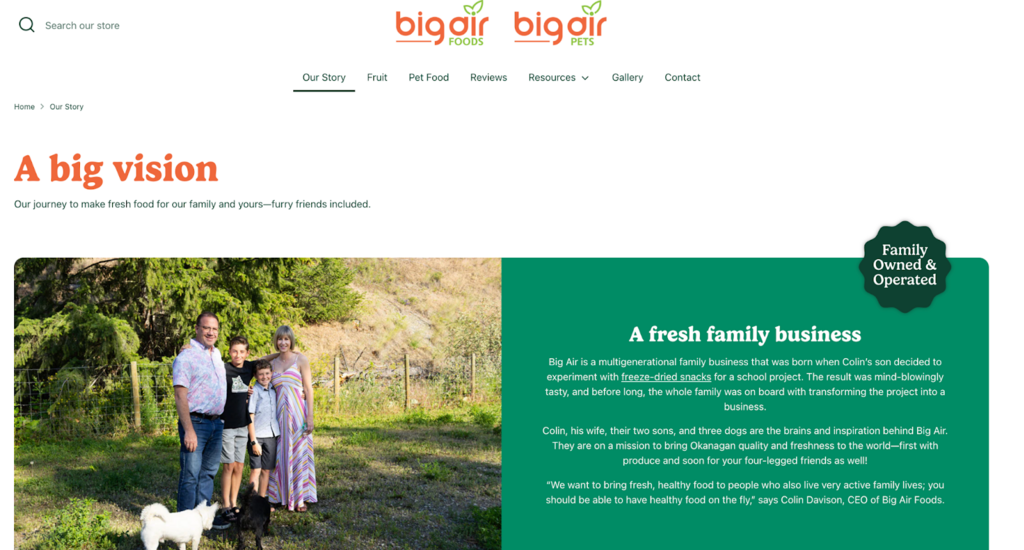
Dennis: I think with food, more than anything, you want to know where it comes from. You want to know the people growing it, and this site shows that.
James: Exactly.
So those are just a few examples. I think there’s something in there for everybody. One of the coolest things about these websites—and the examples I’ve shown—is how effective they are at being the salesperson we keep bringing up. I know it’s becoming a broken record, but they’re very effective salespeople.
A lot of the websites we’ve shown in this podcast are generating hundreds of thousands, even millions of dollars per year in revenue. That’s why you shouldn’t get caught up in the initial or ongoing costs. You should be thinking about the multiple—what’s the return on investment?
Dennis: Yes.
James: These are business tools. Hire a great salesperson, pay them well, because they perform well. That’s the whole idea. It’s not an expense.
Speed, Search, and the Science Behind Growth
James: Some quick stats—just changing gears for a second. If you’re building or upgrading your current site, there are some important numbers you should know.
Dennis: Some KPIs?

James: Yeah. One of them is page speed. What sort of stat do you have for us on page speed?
Dennis: At a maximum, it should load in four seconds.
James: That’s pretty fast. But people have goldfish attention spans these days. I think a goldfish’s memory is only three seconds.
The idea is, that your site needs to be fast. People are super impatient—they need it now. After four seconds, maybe even less, the drop-off rate is very high. People will leave your site before it finishes loading.
Dennis: You just brought up a good point—you think attention spans are getting shorter?
James: I think so.
Dennis: When you start talking about the different types of demographics and target audiences… I mean, I’m a Gen Xer. I’m not sure about you—
James: I’m a Gen Xer too.
Dennis: My kids are millennials. They show me websites, and I’m like, “Wait, wait, back up—show me that again,” because—
James: They go so fast.
Dennis: They do.
James: And our kids are Gen Z, so they’re even faster than the millennials.
Dennis: Yeah. So what are their expectations going to be like if you’re targeting those folks?
James: Exactly. A super fast website is essential.
Which leads into the next stat: Millennials, Gen Z, and even younger people are coming into the buying population. They’ll soon make up a large portion of your sales demographics. We need to be thinking about their experience.
Even if they’re only teenagers right now, not for long. They’ll be buying soon. And they’re on their phones more than anyone else.
Globally, around 40% of all website visits are viewed on phones. But that number is going to grow as phones become even more popular.

Dennis: Until we get contact lenses or something, or those Google glasses that never really took off…
James: Yeah, but you don’t need that because you have an implant.
Dennis: Yes. I am AI.
James: That’s right. Dennis is digital. I know you guys don’t believe me.
Also, the number of website visitors you get just by ranking in the top 10 positions for your products and services it’s a huge deal. We’ve seen the increase. Website traffic can double overnight the moment you hit the first part of the screen.
This is true across the board. If I search for “tire shop” and my city, the first few results get all the shoppers. If I search “lawyers” and my city, same thing. Whether it’s service-based, product-based, local, or national, doesn’t matter.
There are also different types of search results: some have images, some have prices if you can buy online, and some are map results. But the fact is, when you land your company in those top results, your website traffic explodes.
That ties into the bigger idea of treating your website like a marathon. It’s an ongoing experience. It never really ends—unless you want to flatline your growth. Then, sure, you can turn the taps off.
Dennis: That’s right. Yeah. Don’t see that happening.
James: No. So that’s kind of our thoughts on websites—the modern way of thinking of them as business tools. We’re here if you have any questions. Give us a shout. Until next time—see you guys!
Check out our previous podcast episode: You’re Thinking About Your Website All Wrong! (Part 1)
“Between Two Creeks” is Twin Creek Media’s weekly podcast series. You can find us on YouTube, Facebook, Instagram, and Spotify. If you enjoy listening to the latest and wonkiest in marketing every week, don’t forget to hit that subscribe button! If you want us to amp up your website or marketing strategy, contact us and let’s chat!